Chicago Marathon Course Guide 2026: What Runners Should Know Before Race Day
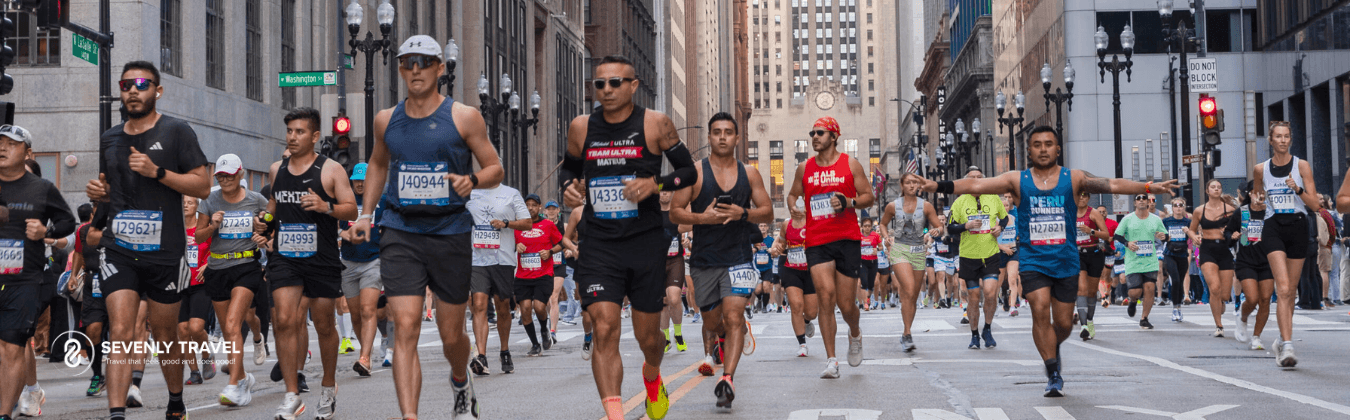
Chicago Marathon Course Guide 2026: What Runners Should Know Before Race Day
The Chicago Marathon is one of those races where the course is part of the experience. The 2026 Bank of America Chicago Marathon takes runners through 29 Chicago neighborhoods, beginning and ending in Grant Park, with an estimated 1.7 million spectators supporting runners along the way.
For runners traveling to Chicago, understanding the course before race weekend can make the entire experience feel much less overwhelming. Knowing where the aid stations are, what fuel is available, where the course becomes more crowded, how the time limit works, and what to expect from different neighborhoods can help you build a better race-day plan.
The 2026 Chicago Marathon takes place on Sunday, October 11, 2026. Before traveling, runners should review the official Chicago Marathon course information because the event notes that course information can change.
What Is the Chicago Marathon Course Like?
The Chicago Marathon course is known for being relatively flat and fast. It starts and finishes in Grant Park and takes runners through 29 Chicago neighborhoods.
The course is designed as a tour through the city rather than a race contained within one small area. The opening miles take runners through downtown before the route moves north through neighborhoods including Lincoln Park and Northalsted. The second half takes runners through areas including the West Loop, Pilsen, Chinatown, and back toward the center of the city before the final stretch into Grant Park.
For first-time Chicago Marathon runners, it helps to think about the course in sections instead of trying to memorize every street.
The opening miles are about settling into your pace and getting comfortable with the race environment. The middle portion is where the neighborhoods and spectators become a major part of the experience. Later, the course becomes more demanding simply because of the distance already covered, making the crowd support particularly meaningful.
The official Chicago Marathon course map is the best place to review the current route before race weekend.
The Chicago Marathon Has 20 Aid Stations
One of the most useful things to understand before race day is that you do not have to carry everything with you.
The 2026 Chicago Marathon has 20 aid stations positioned approximately one to two miles apart. Each aid station provides water, Gatorade Endurance Formula lemon-lime, medical support, portable restrooms, and a public-address announcer.
That spacing means runners can plan their hydration strategy around the official course rather than carrying excessive amounts of fluid for the entire marathon.
If you normally train with a handheld bottle, fuel belt, or another approved setup, you can continue using it. However, the race specifically prohibits hydration backpacks and hydration vests with bladders. The official rules state that fuel belts and handheld water bottles are allowed.
Your race-day hydration setup should be something you have already tested during training. Chicago is not the place to discover that your bottle bounces, your vest is uncomfortable, or your fueling system is difficult to access while running.
What Fuel Is Available on the Chicago Marathon Course?
The Chicago Marathon provides several nutrition and hydration options throughout the course.
Maurten Gel 100 is available at designated locations around Mile 12.4 and Mile 18.1. Both caffeinated and non-caffeinated options are available, and each gel contains 25 grams of carbohydrates.
Chiquita bananas are available at Aid Stations 16 through 18, covering approximately Miles 20.2 through 23.
There are also four Culligan Water Refill Stations positioned around Miles 5.7, 10.1, 15.7, and 20.3 for runners using approved self-carried hydration equipment.
The important part is not simply knowing what is available. You should know beforehand which options you intend to use.
If you have trained with your own gels or sports drink, don't suddenly replace your entire nutrition strategy because something is available on the course. Use your training experience to decide what works for you.
Medical Support Is Available Throughout the Course
The marathon has medical support built into the course.
Medical tents are located at all 20 aid stations, with additional medical locations between approximately Miles 14 and 15 and during the final mile.
There is also a Biofreeze Pain Relief Zone around Mile 21.2 near Cermak Road and Archer Avenue.
For runners traveling from outside Chicago, knowing where medical support is located can provide another layer of preparation. You should still follow your own training and health plan, but knowing that support is positioned throughout the course can help you feel more familiar with the environment before race day.
The official Chicago Marathon participant information is worth reviewing before you travel because it contains the latest race-week information.
What Is the Chicago Marathon Time Limit?
The official Chicago Marathon course time limit is 6 hours and 30 minutes, requiring participants to maintain approximately a 15-minute-per-mile pace or faster. The official end vehicle follows the last starter and maintains approximately that pace.
This is important because the time limit affects more than the clock. It also affects the reopening of streets and the availability of full race support.
According to the official Chicago Marathon event rules, participants outside the time requirement may not be recorded or published as official finishers and may not receive full on-course support from aid stations and traffic-safety personnel.
If you're a first-time marathoner or expect to finish close to the cutoff, make sure you understand this before race weekend.
What Should You Expect From the Chicago Neighborhoods?
One of the most memorable parts of the Chicago Marathon is how dramatically the atmosphere changes as you move through the city.
Lincoln Park is part of the early section of the course. Northalsted, around Miles 7–9, is known for a lively atmosphere, with spectators turning the neighborhood into a major race-day celebration. Choose Chicago specifically highlights the Northalsted area around Miles 7 and 9.
Later, runners move toward the West Loop before continuing south.
Pilsen is around Mile 19. The neighborhood is known for its murals, Mexican-American culture, restaurants, arts scene, and strong community identity. Choose Chicago highlights mariachi bands and local cheering around this section of the marathon.
Chinatown comes around Mile 21, when runners are well into the second half of the race. The neighborhood is known for its community atmosphere and lion-dance performances during marathon weekend.
These neighborhood changes are part of what makes Chicago different from a race where runners spend most of the day on one type of road or in one part of a city.
Find Your People Before You Reach the Starting Line
The Chicago Marathon is enormous, but you don't have to experience it anonymously.
If you're traveling to Chicago from another city, state, or country, one of the hardest parts of a destination race can be arriving somewhere unfamiliar without knowing anyone.
That's where the Sevenly community becomes part of the Race-Cation experience.
Through Sevenly's Race-Cation communities, runners can connect with people heading to the same race, share race-weekend plans, coordinate meetups, exchange preparation tips, and find familiar faces before arriving in Chicago.
If you're traveling solo, that can mean arriving in Chicago already knowing there are other runners you can connect with. If you're traveling with a run club or group of friends, the community can give you another way to meet athletes who are experiencing the same race weekend.
You don't have to join every activity or follow someone else's itinerary. The point is simply to make it easier to find your people when you want to.
How Should You Prepare for the Chicago Marathon Course?
You don't need to memorize every turn.
Instead, understand the parts of the course that will actually affect your race plan.
Know where the aid stations are. Know what fuel is available. Understand your hydration setup. Know the time limit. Review the course map. Make sure your race-day equipment follows the official rules.
Then think beyond the 26.2 miles.
If you're traveling to Chicago, you also need to plan your hotel, transportation, Expo visit, meals, race-morning route, and post-race plans. A destination marathon is a travel experience as much as it is a race.
That is why planning the weekend as a complete Race-Cation can make the experience feel much more organized.
You can explore Sevenly Race-Cations to start planning your race, stay, and community.
Make Chicago More Than a Race
The Chicago Marathon gives you a reason to travel to the city, but the experience does not have to begin when the starting gun goes off.
You have the course, the neighborhoods, the spectators, the people you meet, and the community around the race.
Sevenly Race-Cations are built around that complete experience: find your race, find your people, find your training essentials, and find your stay.
If you're heading to Chicago this October, start planning early and connect with your Sevenly community before you arrive.
Frequently Asked Questions
How many neighborhoods does the Chicago Marathon course pass through?
The Chicago Marathon course travels through 29 Chicago neighborhoods.
Where does the Chicago Marathon start and finish?
The 2026 Chicago Marathon starts and finishes in Grant Park.
How many aid stations are on the Chicago Marathon course?
There are 20 aid stations positioned approximately one to two miles apart.
What is the Chicago Marathon time limit?
The official course time limit is 6 hours and 30 minutes, requiring approximately a 15-minute-per-mile pace or faster.
Can I carry my own hydration?
Yes. Fuel belts and handheld water bottles are allowed, while hydration backpacks are prohibited.
Where can I find the official Chicago Marathon course map?
The current course map is available through the official Chicago Marathon course page.